
The Supreme Court Didn't Decide Haiti Was Safe. It Decided It Didn't Want to Be the Referee.


If you've followed me for any amount of time, then you already know how I approach the law: you have to read past the headlines. Headlines tell you what happened. Lawyers have a responsibility to figure out why it happened. And sometimes, those are two very different conversations.
So, let’s call this decision what it is and what it isn’t. This wasn’t a ruling that Haiti is suddenly safe. It wasn’t a declaration that the humanitarian crisis has ended. It wasn’t even a determination that the Department of Homeland Security (DHS) got it right. And if you read the opinion carefully, you’ll notice something striking.
The Supreme Court never truly wrestled with the question that has kept hundreds of thousands of Haitian TPS holders awake at night:
Should TPS have been terminated?
Instead, the Court asked a completely different question.
Who gets to make that decision without the courts looking over their shoulder?
And that’s where this case becomes bigger than immigration. It’s about power. It’s about accountability. And it’s about what happens when one branch of government quietly hands another branch the keys and then steps back.
A Masterclass in Reframing the Question
One of the first things they teach you in trial advocacy, and something I’ve seen play out every day as a prosecutor, is this: whoever controls the question usually controls the answer.
The plaintiffs came before the Court arguing that DHS failed to follow the procedures Congress required before terminating TPS. They argued that mandatory steps were ignored, that evidence wasn’t properly evaluated, and that courts should be able to review whether the agency followed the law before making a decision that would affect hundreds of thousands of lives.
The majority had another idea.
Rather than asking whether DHS followed the rules, the Court asked whether judges even have the authority to check the work.
That may sound like legal semantics.
It isn’t.
It’s the difference between asking whether the referee made the right call and asking whether anyone is even allowed to review the replay at all.
Once the Court reframed the issue that way, the rest of the opinion almost wrote itself.

Here’s the Part That Should Give Every Lawyer Pause
Now, don’t get me wrong. Congress absolutely has the authority to give executive agencies broad discretion. That’s nothing new. But broad discretion has never meant unlimited discretion. And that’s where I found myself wrestling with the majority’s reasoning.
The Court relied on language in the TPS statute suggesting that certain decisions by the Secretary of Homeland Security are not subject to judicial review. Fair enough.
But then came the leap.
The Court didn’t just say judges can’t second-guess the Secretary’s ultimate decision. It effectively concluded that judges also cannot meaningfully examine how that decision was reached. And that’s where this opinion deserves a much closer look.
Administrative law has never been about letting judges run executive agencies. It’s about making sure those agencies stay within the lanes Congress painted for them.
That’s not judicial activism. That’s judicial oversight. There’s a difference.
If Congress says, “You must consider these factors before making this decision,” who makes sure those factors were actually considered? According to the majority, the answer is largely the Executive Branch itself. And that should make all of us pause.
Justice Kagan Asked the Question the Majority Didn’t Answer
One of the reasons I always encourage people, lawyers or not, to read the dissent is because today’s dissent has a funny way of becoming tomorrow’s majority. Justice Elena Kagan wasn’t arguing that judges should run immigration policy. That’s an easy oversimplification, but it’s not what she wrote. Her point was much narrower and much more fundamental.
Courts should still be able to answer one simple question:
Did the Executive Branch follow the rules Congress gave it?
Notice what that question is not asking. It’s not asking judges to decide whether Haiti deserves TPS forever. It’s not asking courts to replace DHS’s expertise. It’s asking whether the agency complied with the law before exercising its discretion. That’s a question courts answer every single day in virtually every other area of administrative law.
So why should this be different?
Checks and Balances Aren’t Supposed to Be Optional
Here’s where this opinion becomes much bigger than Haiti. Today we’re talking about TPS. Tomorrow it could be environmental regulations. Veterans’ benefits. Healthcare. Education. Civil rights. Any area where Congress gives executive agencies broad authority. The legal principle doesn’t stop at immigration.
That’s why this decision deserves attention from more than immigration lawyers. It raises a larger question that should concern every American, regardless of political affiliation:
If the courts increasingly decline to review whether executive agencies followed the law, who will?
Our constitutional system wasn’t built because the Founders believed government officials would always make the right decisions.
It was built because they knew something timeless:
power requires accountability.
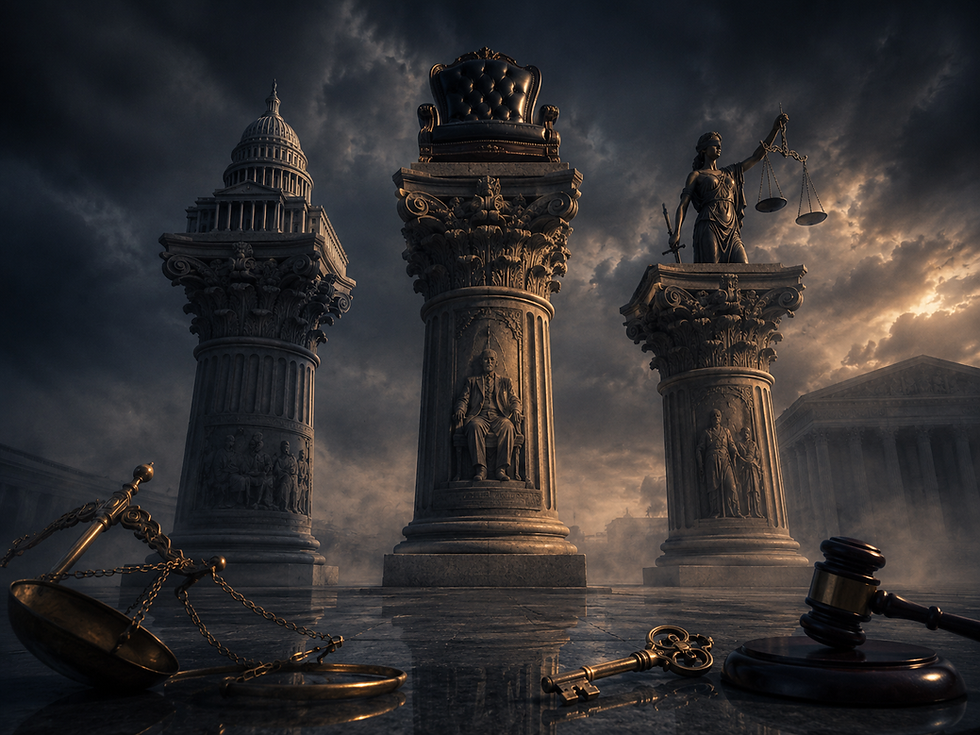
Congress writes the laws. The Executive enforces them. The Judiciary makes sure everyone stays inside the constitutional lines. Remove one of those guardrails, and the balance begins to shift.
The Humanity Never Left the Room; The Majority Just Didn’t Stay There
One thing the Court did acknowledge was the human cost. The majority recognized that terminating TPS could mean families losing work authorization, lawful presence, and protection from removal. It didn’t deny those consequences. But after acknowledging them, the opinion moved right back into statutory interpretation. That’s the tension at the heart of this case. The humanitarian realities never disappeared.
The Court simply concluded they could not overcome what it viewed as limits on judicial authority. Legally, that’s a different conversation. Emotionally, however, I understand why many people feel like the real issue was left unresolved.

The Real Legacy of This Decision
Years from now, lawyers may not remember this case primarily because it involved Haiti. They may remember it because it quietly expanded the space between executive power and judicial oversight.
Sometimes history isn’t shaped by the questions courts answer. Sometimes it’s shaped by the questions they choose not to answer. The Supreme Court didn’t tell us Haiti was safe. It didn’t tell us DHS got everything right. It didn’t tell us the humanitarian concerns lacked merit. It told us something far more consequential.
It told us that, in this instance, the Executive Branch gets the final word with remarkably little judicial interference. Whether that is faithful to the Constitution or an expansion of executive authority that future courts will one day revisit is a debate that is far from over. And that’s exactly why this opinion deserves to be read, not just by immigration lawyers, but by anyone who still believes that power and accountability should travel together.
Because if there’s one thing I’ve learned both in the courtroom and in life, it’s this:
When the questions begin to disappear, we should all pay closer attention.


Comments